Benefits of Red Light Therapy
An evidence aware guide to the red light therapy benefits people seek for pain, skin, sleep and exercise, separating targeted clinical research from broader full body wellness claims.
Written and reviewed by Perth Recovery Guide · Last reviewed 5 September 2026
In brief
Photobiomodulation can produce biological effects, but 'red light therapy' is not one standard treatment. Results depend on the condition, wavelength, irradiance, total dose, timing, treatment area and device. The clearest answer is therefore benefit by benefit, not a blanket promise.
This guide is for: Readers looking for a balanced summary of possible red light therapy benefits for exercise recovery, pain, skin and general wellbeing.
Where red light therapy may fit
People are attracted to red light therapy because it is passive, brief and easy to combine with other recovery routines. Research suggests potential benefits in selected pain, skin and tissue applications, while evidence for whole body athletic recovery is still developing.
- A clear goal, such as a specific pain or recovery measure, makes progress easier to judge
- Device specification and dose matter more than the brightness or marketing language
- It should complement appropriate diagnosis, rehabilitation, sleep and training rather than replace them
Why the treatment format matters
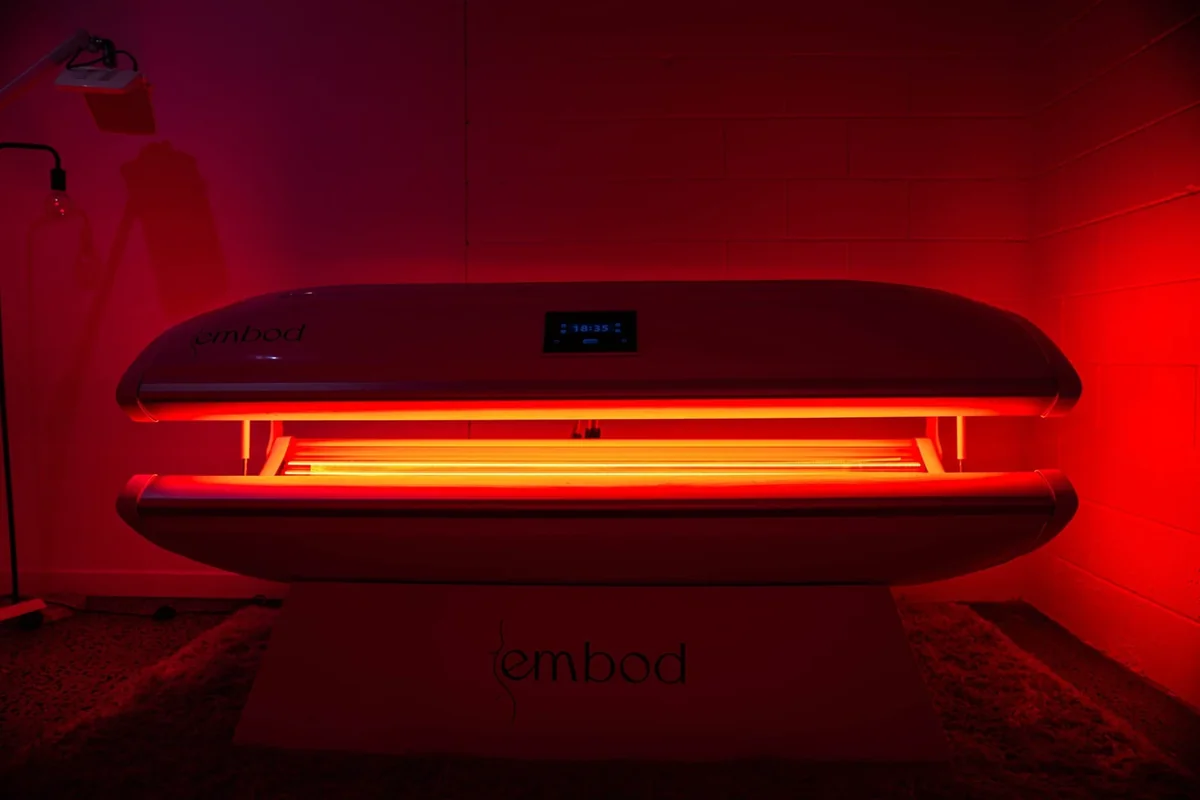
Targeted photobiomodulation applies a measured dose to a defined body area. Full body beds expose a much larger area, often with a different dose and purpose. Evidence from a laser or clinical device used on one painful joint cannot automatically prove that a commercial full body session will improve whole body recovery.
Where evidence is most encouraging
Research is most useful when it matches a specific outcome. Photobiomodulation has been studied for selected pain conditions, wound and skin applications, and local muscle performance or recovery. The strength of evidence differs across each use, and appropriate clinical care remains important.
- Pain: some reviews report improvement in selected musculoskeletal and chronic pain conditions
- Skin: specific protocols have been studied for wound healing and signs of photoageing
- Muscle: targeted pre exercise or post exercise protocols have produced mixed but sometimes encouraging results
- Sleep: early whole body studies suggest a possible benefit, but the evidence base is small
Where marketing moves faster than evidence
Claims that one full body session will reduce inflammation everywhere, accelerate all healing, improve brain health, boost endurance and prevent injury go beyond what current evidence can support. A sensible approach is to select one measurable goal and review whether the experience is worth the cost after an appropriate trial.
What people are trying to achieve
Pain and movement
Promising results exist for some conditions, but the treatment area and dose must match the research.
If pain is reduced, movement may feel easier; red light does not replace diagnosis or rehabilitation.
Skin and tissue
Controlled red light protocols may support collagen related changes and aspects of skin appearance.
Photobiomodulation is used in some clinical tissue healing settings, which is different from claiming every wellness bed heals injuries.
Performance and recovery
Some local applications are encouraging for fatigue and soreness, but dose and timing are critical.
A 2025 systematic review found no clear improvement in exercise recovery or performance, despite a possible sleep benefit.
Planning a Perth session
Before choosing a facility, connect the service to what you actually want from the visit. These practical checks make it easier to compare venues and arrive prepared.
- Choose a provider that clearly identifies its device and session protocol
- Treat the service as an optional addition rather than a replacement for diagnosis or rehabilitation
- Track a specific outcome over several sessions instead of relying only on immediate impressions
Prices, session formats and opening arrangements can change. Use the directory to compare options, then confirm the current details through the linked official business website.
What the evidence can tell us
Some photobiomodulation studies report useful outcomes for particular pain, skin and exercise measures, but evidence is not uniform. Whole body research remains limited, and a recent review found no clear benefit for exercise recovery or performance despite a possible sleep signal.
Common questions
Does red light therapy reduce inflammation?
It can influence inflammatory signalling in laboratory and clinical contexts, but the real world effect depends on the condition and protocol. 'Reduces inflammation' should be treated as a possible mechanism or outcome, not a guarantee.
Practical next step: Ask the provider for the device wavelength range, treatment distance, session duration and intended dose rather than judging the service by brightness alone.
Can red light improve muscle recovery?
Targeted studies are more encouraging than whole body research. A recent whole body review found no clear recovery or performance benefit, so ask which evidence matches the actual device being offered.
Practical next step: Ask the provider for the device wavelength range, treatment distance, session duration and intended dose rather than judging the service by brightness alone.
Can it improve skin?
Certain red light protocols have been studied for photoageing, collagen related changes and wound healing. Results depend on wavelength, dose and repeated treatment; a full body wellness session is not a substitute for dermatological care.
Practical next step: Ask the provider for the device wavelength range, treatment distance, session duration and intended dose rather than judging the service by brightness alone.
Will one session make a difference?
Some visitors notice relaxation or warmth immediately, but many research protocols use repeated sessions. Track one relevant outcome over time rather than interpreting a single pleasant session as proof of healing.
Practical next step: Ask the provider for the device wavelength range, treatment distance, session duration and intended dose rather than judging the service by brightness alone.