Beginner's Guide to Red Light Therapy
A clear introduction to red light therapy in Perth: what photobiomodulation is, how a session works, why people try it and the questions that reveal whether a provider offers a credible protocol.
Written and reviewed by Perth Recovery Guide · Last reviewed 5 September 2026
In brief
Red light therapy, also called photobiomodulation, uses selected red and near infrared wavelengths. It is not ultraviolet tanning light and it is not primarily a heat treatment. The device, wavelength, dose, distance and treatment area all influence what is being delivered.
This guide is for: People comparing their first full body red light or photobiomodulation session in Perth and wanting to understand the equipment, preparation and realistic expectations.
Why people try red light therapy
Photobiomodulation uses specific red and near infrared wavelengths with the aim of influencing cellular energy processes and signalling involved in inflammation and repair. People usually seek it for pain, skin concerns or exercise recovery, but results depend heavily on the device and dose.
- It is non invasive and does not create the strong heat or cold stress of other recovery services
- Some targeted clinical uses have encouraging evidence
- Results from one wavelength, dose or body area cannot automatically be applied to every full body commercial device
What red light therapy actually is
Red and near infrared light can be absorbed by light sensitive molecules in cells and may influence mitochondrial activity, signalling, blood flow and inflammatory processes. That proposed mechanism is why photobiomodulation is researched for pain, tissue repair, skin and exercise. It does not mean every wavelength or commercial device produces the same effect.
What a full body session feels like
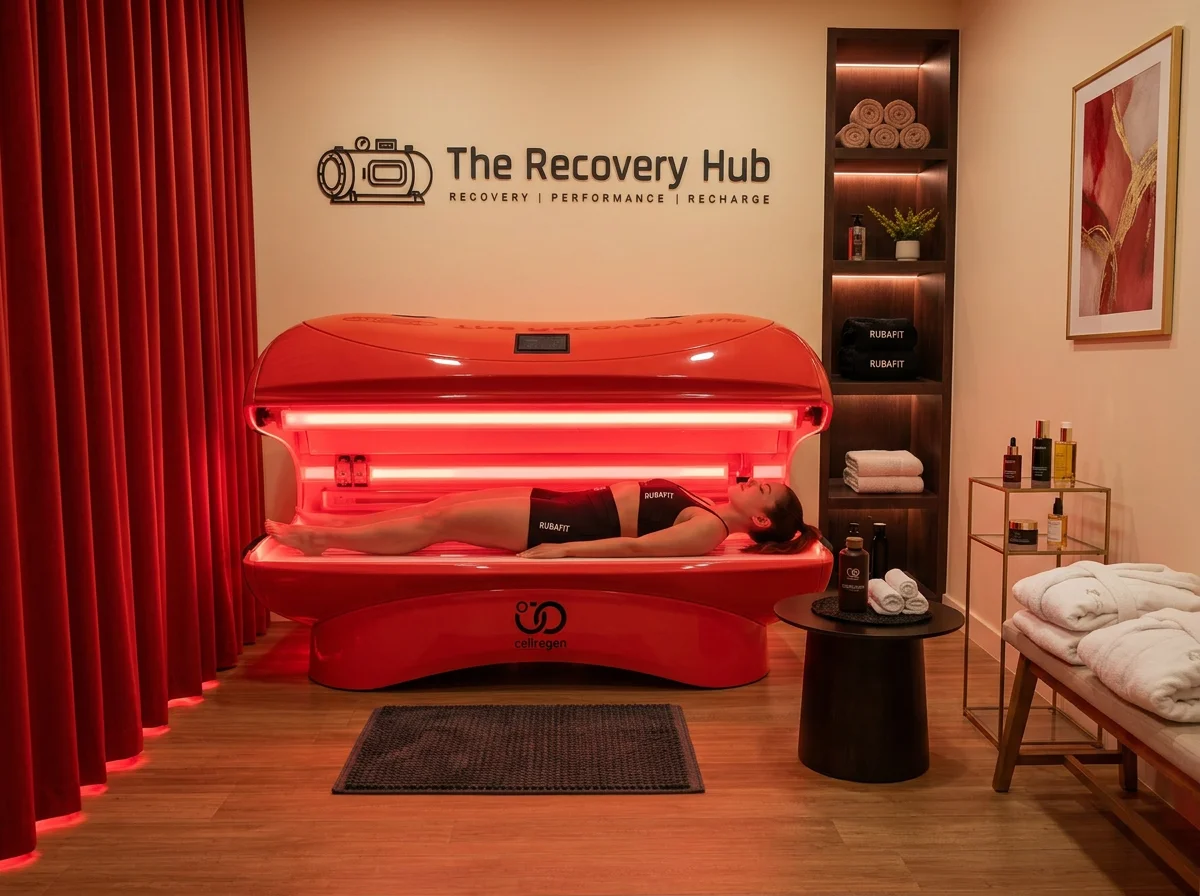
Perth venues may use an enclosed full body bed, an open panel system or a smaller targeted device. Sessions are usually passive and brief. The light is bright and the equipment can feel mildly warm, but you should not experience the heavy heat and sweating expected in an infrared sauna.
- Follow the provider's instructions about clothing, distance and body position
- Use eye protection when the device or provider requires it
- Do not lengthen a session in the belief that more light must work better
- Tell staff about photosensitive conditions, medicines or an unexpected skin reaction
How to judge a provider
A useful provider should be able to identify the device, wavelength range, treatment format and recommended session time. Ask what outcome the protocol is intended to support. A precise answer about dose and purpose is more meaningful than a long list of unrelated promises.
What people are trying to achieve
Pain and movement
Targeted photobiomodulation has shown promising pain outcomes in some musculoskeletal and chronic pain research.
Reduced pain may make movement feel easier, but this depends on the condition and treatment protocol.
Skin and tissue
Specific red light protocols have been studied for skin appearance, collagen related changes and wound healing.
Clinical applications use controlled doses; a commercial full body bed should not be assumed to reproduce every targeted result.
Performance and wellbeing
Local photobiomodulation has encouraging research for some exercise outcomes, although protocols vary widely.
Current whole body evidence is limited; a 2025 review found a possible sleep signal but no clear exercise recovery benefit.
Planning a Perth session
Before choosing a facility, connect the service to what you actually want from the visit. These practical checks make it easier to compare venues and arrive prepared.
- Ask whether the service uses a full body bed, panels or targeted equipment
- Confirm the session length, wavelengths, eye protection and clothing instructions
- Tell the provider about light sensitive conditions or medicines before booking
Prices, session formats and opening arrangements can change. Use the directory to compare options, then confirm the current details through the linked official business website.
What the evidence can tell us
Photobiomodulation research uses different wavelengths, doses, devices and treatment schedules. Results from a targeted clinical device cannot automatically be applied to every commercial full body bed or home panel.
Common questions
Is red light therapy the same as an infrared sauna?
No. Infrared sauna is designed to warm the body and promote sweating. Photobiomodulation uses specific light wavelengths at a controlled dose and generally does not aim to raise core temperature substantially.
Practical next step: Ask the provider for the device wavelength range, treatment distance, session duration and intended dose rather than judging the service by brightness alone.
Is red light therapy ultraviolet light?
No. Red and near infrared wavelengths are different from ultraviolet tanning light. Ask the provider to identify the wavelength range used by its device.
Practical next step: Ask the provider for the device wavelength range, treatment distance, session duration and intended dose rather than judging the service by brightness alone.
What should I wear?
Light must reach the intended skin area, so providers may recommend exposing more skin for a full body session. Follow the venue's privacy, clothing and eye protection instructions.
Practical next step: Check the venue confirmation before leaving home; clothing, towel, footwear and jewellery rules differ between facilities.
How many sessions are needed?
There is no universal schedule. The answer depends on the goal, device and dose. Ask the provider what outcome it is targeting, how progress will be judged and what evidence supports the suggested course.
Practical next step: Ask the provider for the device wavelength range, treatment distance, session duration and intended dose rather than judging the service by brightness alone.